Using the Common Outcomes Framework to support an early years curriculum approach
Background:
In Westminster and Kensington and Chelsea, the Common Outcomes Framework is being used to support a more joined-up approach to early years practice, family hub delivery and wider support for children and families.
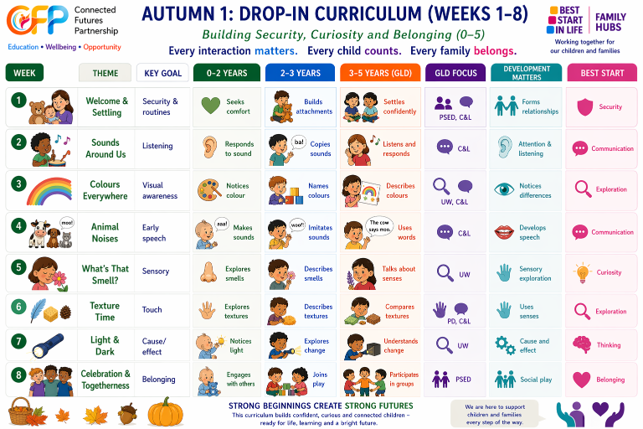
The work began from a practical question: how could a curriculum approach within early years drop-ins help practitioners, parents and wider partners understand what children need, what they should be seeing at different stages of development, and when additional conversations or support might be needed?
The Framework was seen as a way to bring greater structure and shared language to multi-agency working.
“There isn’t a shared common understanding, there isn’t a shared language.”
“There was a need to have an element of, we’re all going to sing off the same hymn sheet.”
The curriculum was initially developed to support nursery and drop-in provision for children aged two and above. The aim was not to create a rigid or prescribed model, but to give practitioners a clear understanding of key developmental milestones, the purpose behind activities, and how these could support conversations with parents.
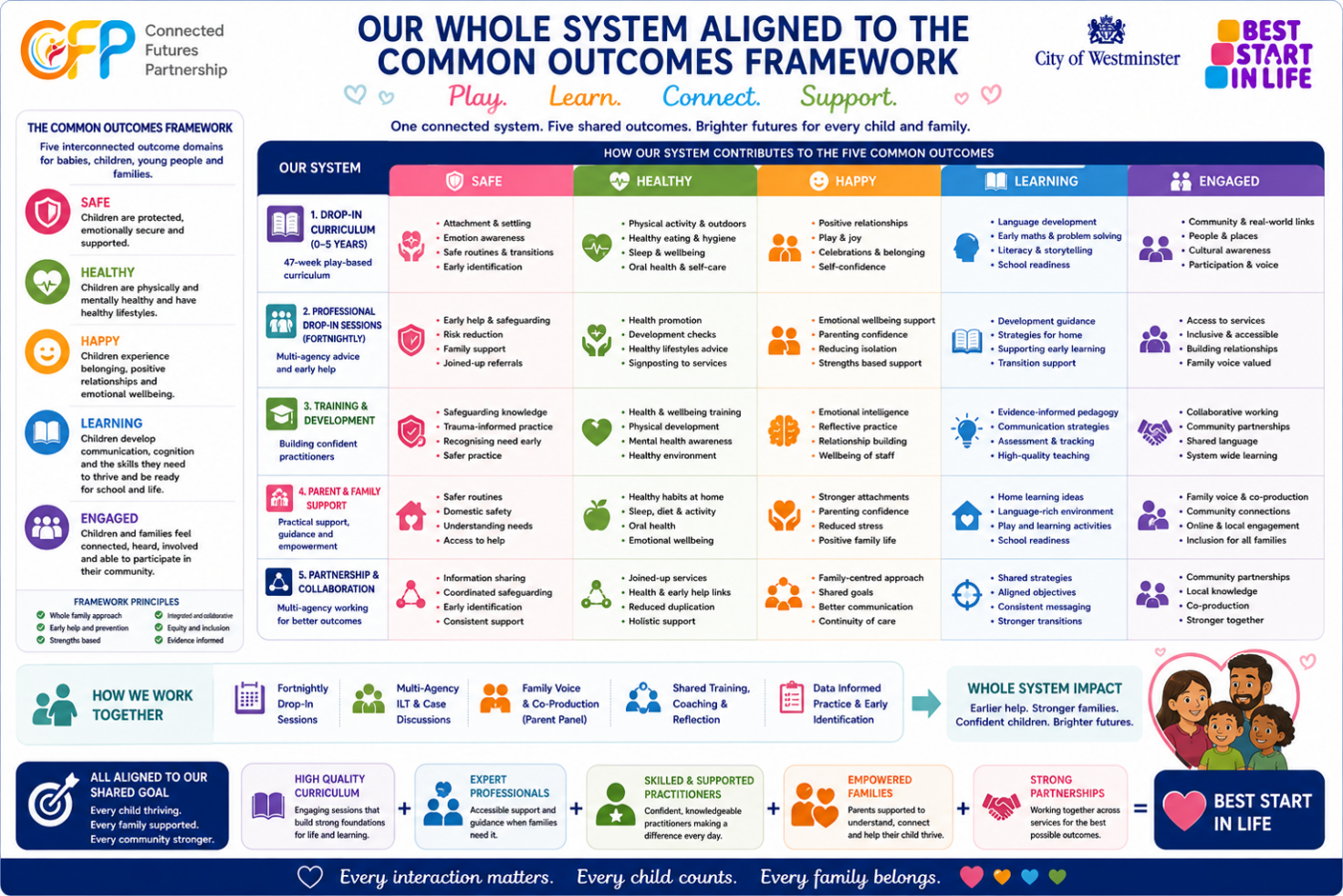
A key part of the approach was ensuring that the curriculum did not become too narrowly focused on education outcomes alone. By mapping the work against the Common Outcomes Framework, the team was able to check that the curriculum supported the whole child and the whole family, including links to health, safety, emotional wellbeing, learning and wider family support.
The approach has also helped make links between home, early years settings and wider services more explicit. Parent guides and activities are being developed to support the home learning environment, while also helping families understand what they might expect to see as their child develops and where additional support may be available.
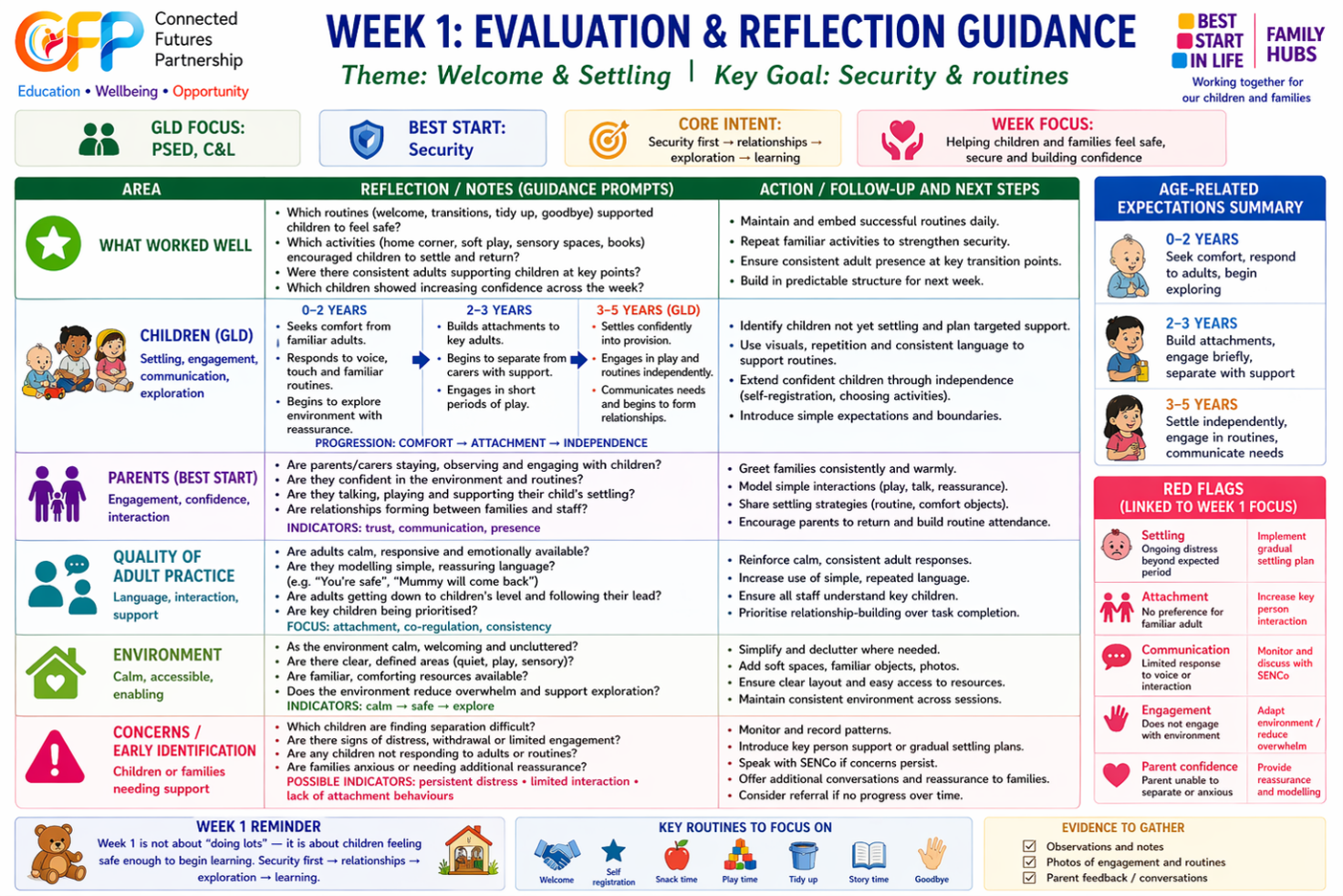
Early testing has already shown promise. Practitioners have reported feeling more confident in understanding why they are doing an activity, the purpose behind it, and how to use key prompts to open up conversations with parents. These conversations are helping to identify needs earlier, including referrals to speech and language drop-ins and CAMHS support around sleep and emotional regulation.
The work is also beginning to generate themes about what parents need support with, creating opportunities to plan resources and develop further courses or support through the integrated leadership team.
“It’s not that they have to use it, it’s not a prescribed way but it’s something to build from… it gives you a starting point as to how to build a package that best supports the whole family.”
‘
The next stage will see the full package rolled out at Queen’s Park, with wider interest across Westminster and Kensington and Chelsea family hubs. There is also potential for the approach to be adapted by private, voluntary and independent early years settings, childminders and other drop-ins.
The power of the Framework lies in helping different professionals understand their role in a bigger shared picture.
“It’s just that common language, that common approach, that common outcome.”
“We’re all pulling towards a bigger picture and we have to do that through connection. Connection happens when we have a Common Outcomes Framework and this is where we all sit within that.”