Common Outcomes Case Study – Collective Futures
‘Start where you are, and the Common Outcomes Framework travels with you.’
Sophie Richardson, Head of Partnerships & Programmes
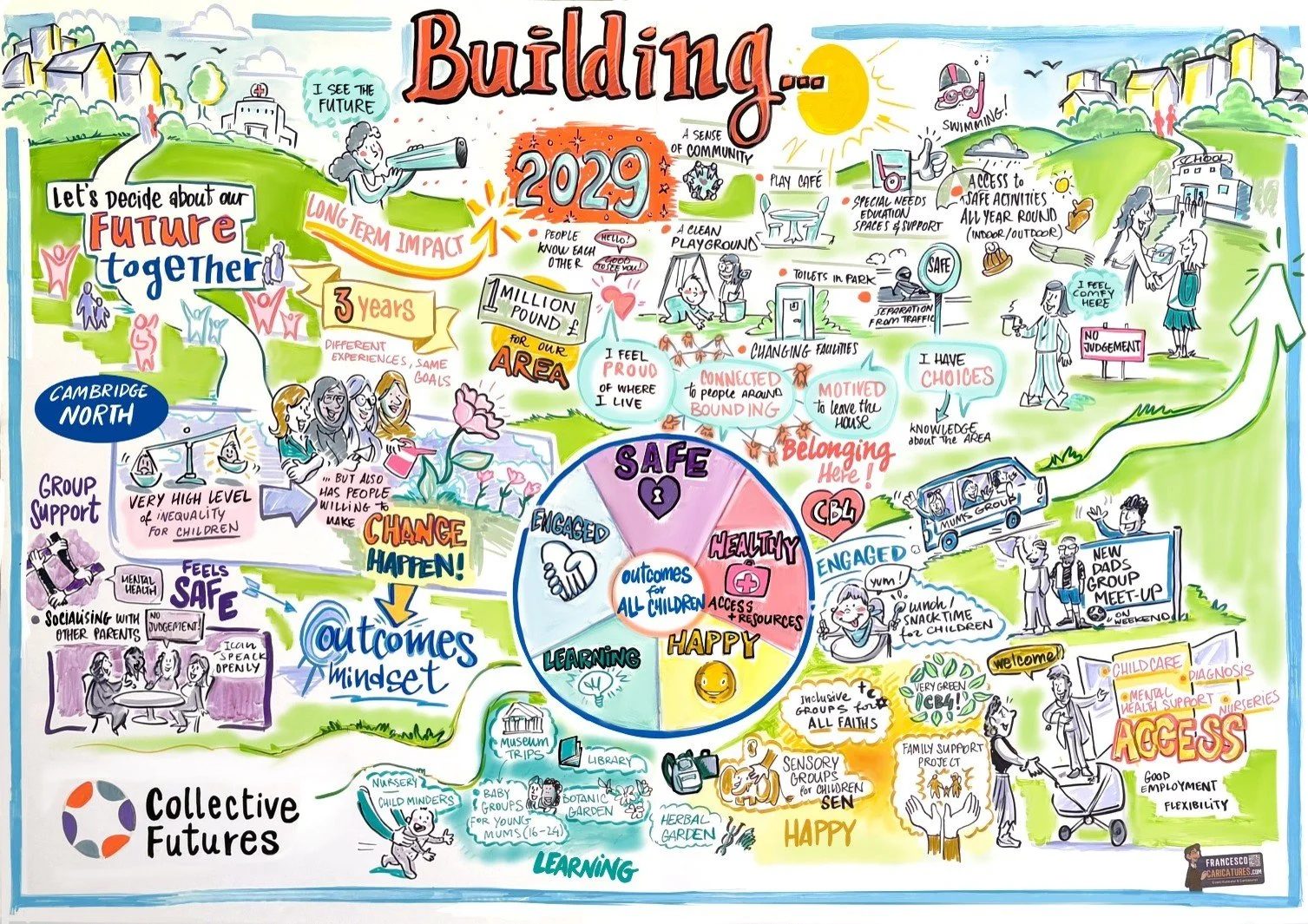
Collective Futures have been a core supporter and active participant in the movement towards common outcomes for all babies, children and young people since they were established in 2024.
Collective Futures backs the people and places helping babies and young children thrive — and works with funders, businesses, and government to change the systems around them so that local insights shape national change. They are currently delivering a multi-year grant-making initiative focused on improving outcomes in early childhood – the Local Ecosystems Fund.
This fund is investing £2.5 million over three 3 in two communities with persistent disadvantage gaps, but where there are the enabling conditions for change:
Barrow-in-Furness
North & East Cambridge
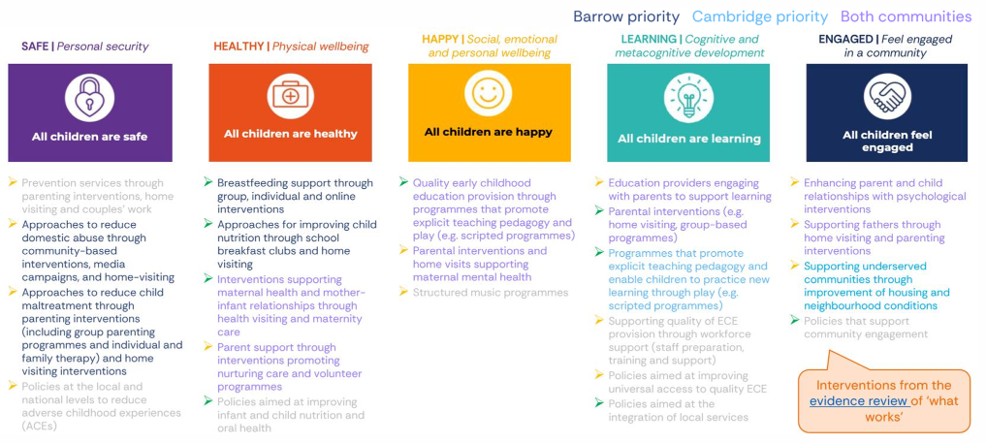
Collective Futures have embedded the Common Outcomes Framework through their detailed approach to designing the fund and grant distribution. This has spanned a wide range of activities including stakeholder conversations and data reviews.
1. Learning sessions with local partners and carers
Collective Futures worked with facilitators to design conversation sessions around the Common Outcomes Framework:
‘It gave us a simple structure to help parents and carers understand and frame conversations.’
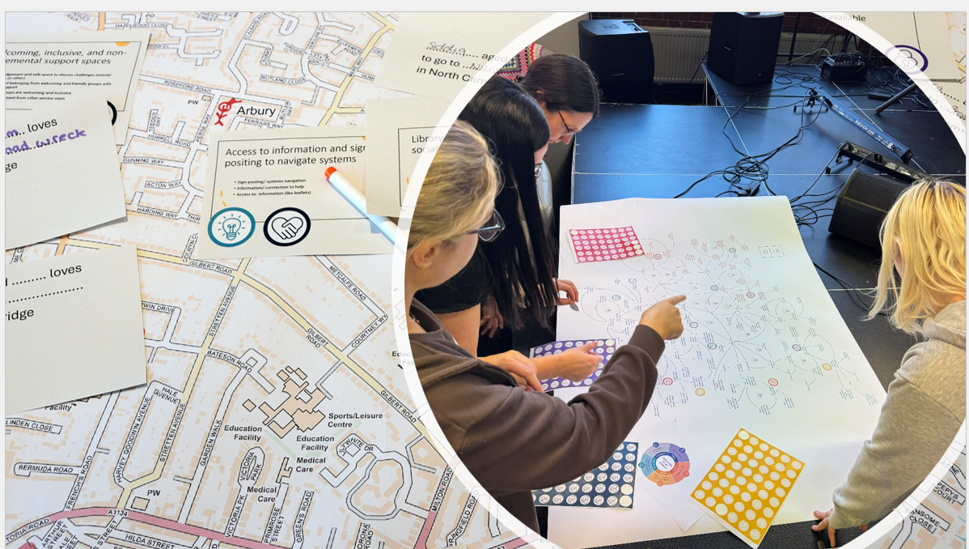
At the start of the workshops, parents and carers wrote their child’s name in the centre of the framework, and used the structure to discuss the things that were most important to them when it came to their child’s outcomes. This approach offered a visual and engaging format to support these conversations with community members.
Prior to the workshops, Collective Futures worked with the communities to develop systems maps, supported by their learning partner, Dartington Service Design Lab. The systems maps detailed the things that affected babies, children and families in each community. In the workshops, parents and carers then used Common Outcomes icon stickers to build the connections between outcomes and challenges, barriers and opportunities in their communities.
1. Mapping out priorities against domains:
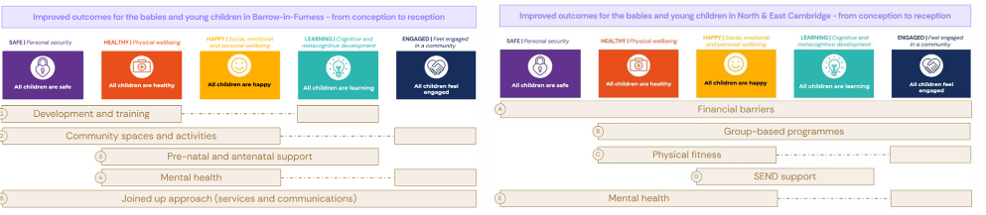
Collective Futures were then able to use the domains of the Common Outcomes Framework to map:
Current services and organisations
Opportunities
Gaps in provision
This helped the parents & carers think through where funding could most amplify existing efforts, and where new provision was needed to meet their needs.
‘It enabled us as a funder to use language and shared terminology that was accessible for both local authorities and local grassroots organisations.’